The Barbell and the Broker: Hotel Brokerage in 2026 and the Discipline of Selective Opportunity
By Nathan Snyder
July 9, 2026

Good morning, friends of Hotelier Times. Pull up a chair, pour yourself something strong, and let’s talk. I’ve been poring over the latest reports from JLL, HVS, Colliers, Cushman & Wakefield, and a handful of others these past couple of weeks, and I want to lay out my case plainly. The hotel brokerage market isn’t staging some broad, feel-good recovery in 2026. It’s splitting right down the middle—luxury and trophy assets throwing off premium pricing and quick closings while a whole lot of everything else is still fighting for air.
If you’re in this business, that split isn’t just interesting data. It’s the difference between a banner year and a frustrating one. Here’s the case I’m building, backed by the numbers and the cross-referenced research, delivered the way I see it.
Let’s Start with the Volume Story—Because the Headlines Are Only Half Right
Transaction activity is up. No question. JLL’s Global Hotel Investment Outlook 2026 shows global hotel investment volumes rose 22% in 2025 from the 2023 low point, with the Americas leading at +27% (JLL Hotels & Hospitality Group, 2026). Cushman & Wakefield’s first-quarter 2026 U.S. Hospitality MarketBeat clocked nearly $9.4 billion in hotel sales, a 64% jump year-over-year, with limited-service volume nearly doubling (Cushman & Wakefield, 2026). Those are real numbers. Momentum exists.
But when I stack that against Colliers’ 2026 U.S. Hospitality Outlook and Matthews’ outlook for the same year, a more cautious picture emerges. Colliers is forecasting only 1.3% demand growth and 1.35% ADR growth in the top 50 markets—well below historical averages—and notes that nine out of ten consumers are now laser-focused on value (Colliers, 2026). Matthews points to a potential wave of new listings as over-levered owners face reality, estimating thousands of additional properties could hit the market (Matthews, 2025).
So yes, volume is rebounding. But a lot of that volume is selective, event-driven, or distress-tinged. That’s my first takeaway: don’t confuse more deals with easy deals.
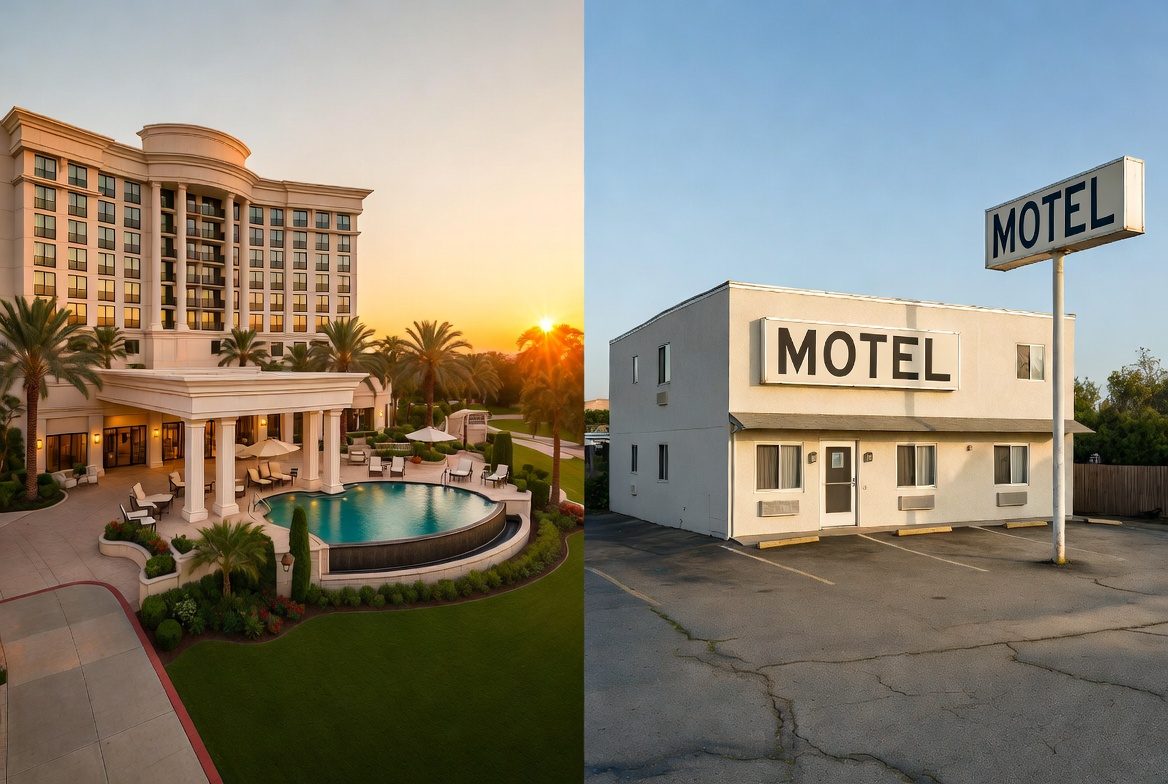
The Bifurcation Is Real—And It’s the Core of My Argument
Here’s where the story gets sharp. The performance gap between luxury/upper-upscale and the rest of the field isn’t narrowing. PwC’s Emerging Trends work, updated into 2025–2026 observations, flagged this premiumization split early, and the data has only reinforced it. Luxury posted solid RevPAR gains while economy segments saw declines (PwC, 2025). HVS transaction data shows overall cap rates averaging around 8.2–8.3% recently, but with clear daylight between segments: stabilized luxury and extended-stay assets trading tighter, while older limited- and full-service properties that need work clear at wider spreads (HVS, 2026).
MMCG’s analysis of CoStar figures puts upscale and upper-midscale cap rates near 9.5% in 2025, luxury closer to 8%, and economy above 10.5%—roughly 100–150 basis points wider than pre-pandemic norms for many categories (MMCG, 2025). National average price per room hovers around that $117,000 mark we’ve seen cited, yet economy assets are moving well below $50,000 per key in many cases while true trophy properties in core markets are clearing multiples of that.
What I’m arguing is this: the market has developed a split personality, and it’s not going away in 2026 or 2027. Luxury is behaving like a scarce, high-conviction asset class. Everything else is competing harder for fewer discretionary dollars. Brokers who try to straddle both worlds without real depth in either are going to feel the friction.

Debt, Cap Rates, and the Refinancing Clock That’s Still Ticking
Cap rates are stabilizing and, for the best assets, showing early signs of modest compression as liquidity improves—CBRE’s recent cap rate survey work points in that direction (CBRE, 2026). But the debt picture remains complicated. Significant CMBS hard maturities are still on the calendar for 2026, and broader commercial mortgage maturities remain elevated even if the absolute peak has passed (Trepp, 2026; Mortgage Bankers Association data referenced in 2026 analyses). Many of those loans were written in a different rate environment.
What this means on the ground, in my view, is that lenders are still highly selective. Strong operating histories and credible business plans get financed or sold quickly. Everything else requires more creativity—recapitalizations, seller financing conversations, or outright exits at adjusted prices. HVS expects average cap rates to trend downward in 2026 partly because more challenged assets will transact, pulling blended numbers lower even as quality product stays firm (HVS, 2026). That dynamic rewards brokers who can read both the asset and the capital stack accurately.
Adaptive Reuse and Event Tailwinds—Where the Smart Money Is Moving
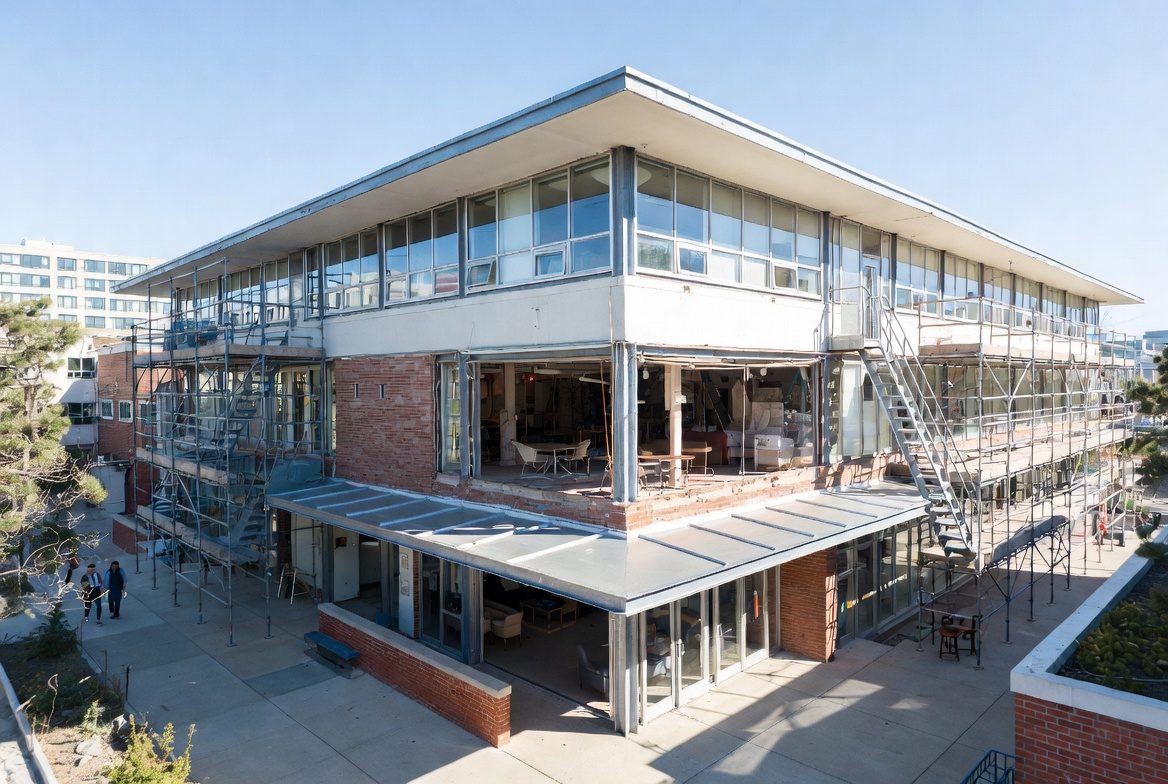
One bright spot I keep coming back to is adaptive reuse and conversions. With new construction still expensive and debt picky, turning offices, retail, or tired hotels into repositioned product is generating real brokerage activity. The economics can work when food-and-beverage revenue becomes a larger slice of the pie. Colliers and others note that moderating supply pipelines should ultimately support existing and converted inventory (Colliers, 2026).
Then there’s the event calendar. The 2026 FIFA World Cup is already concentrating attention on host and spillover markets. Major events have a proven track record of creating short- and medium-term cash flow upside for well-located assets. Layer on resilient global travel demand—JLL notes international arrivals surpassing pre-pandemic levels in 2025 with further air passenger growth expected (JLL Hotels & Hospitality Group, 2026)—and you have pockets of genuine opportunity. But again, those pockets tend to favor the stronger segments and the better locations.
My Playbook—the Case I’m Making for Brokers Who Want to Win
After walking through all of this, here’s the formal case I’m putting forward:
Specialization beats generalism right now. Whether you go deep on luxury and trophy assets with institutional and family-office buyers, or you build real expertise in value-add and distressed situations with opportunistic capital, pick a lane and own it. The data is too segmented for anything else.
Data fluency is non-negotiable. Buyers want credible multi-year forecasts, not historical averages. If you’re not fluent in STR, CoStar, and segment-specific modeling, you’re bringing a knife to a gunfight.
Relationship architecture across private equity, family offices, and international capital is the real moat. The most active buyers lately have been private investors with dry powder and flexible mandates (Crittenden Report, 2026). Repeat access to that capital wins deals.
And perhaps most importantly, the best brokers are acting as strategic advisors, not just matchmakers. Helping an owner decide whether to sell, recapitalize, or reposition—and then executing—is where the durable value is created.
Deloitte’s broader CRE outlook and Mordor Intelligence’s market sizing both point to continued growth in the hospitality real estate sector over the medium term, but that growth will be uneven and concentrated (Deloitte, 2025; Mordor Intelligence, 2026). The brokers who internalize that unevenness will be the ones still standing tall at the end of the year.
That’s My Take
Look, I’m not here to sugarcoat it. 2026 is shaping up as a year of selective, hard-won opportunity rather than a rising tide. The bifurcation is real. The debt clock is still ticking for plenty of owners. But for brokers who specialize, stay data-sharp, and build the right relationships, there is real production to be had—especially on the luxury end and in smart conversion plays.
That’s the case I’m making after digging through the reports, cross-checking the numbers, and thinking about what it actually means for people doing the work every day. The market has chosen sides. The question is: which side are you built for?
Thanks for reading along with me today. If this resonates—or if you’ve got a different read on any of these numbers—I’d love to hear from you in the comments or over on LinkedIn. Let’s keep the conversation going. This is Hotelier Times, and I’m glad you’re here.
References
Colliers. (2026). U.S. Hospitality Outlook Report | 2026. https://www.colliers.com/en/research/nrep-ushsp-hospitality-outlook-report-2026
Crittenden Report. (2026, May 12). Multiple factors are shaping the outlook for hotel real estate in 2026. Crittenden Report. https://crittendenreport.com/multiple-factors-are-shaping-the-outlook-for-hotel-real-estate-in-2026/
Cushman & Wakefield. (2026). U.S. Hospitality MarketBeat. https://www.cushmanwakefield.com/en/united-states/insights/us-marketbeats/hospitality-marketbeat
Deloitte. (2025). 2026 commercial real estate outlook. https://www.deloitte.com/us/en/insights/industry/financial-services/commercial-real-estate-outlook.html
HVS. (2026, April 30). U.S. Market Pulse: April 2026. https://www.hvs.com/article/10450-hvs-us-market-pulse-april-2026
JLL Hotels & Hospitality Group. (2026). Global hotel investment outlook 2026. https://www.jll.com/en-us/insights/market-outlook/global-hotel-investment
Matthews. (2025). 2026 Hospitality Outlook. https://www.matthews.com/insights/2026-hospitality-outlook
MMCG. (2025, August 30). U.S. hotel cap rates in 2025: Trends, drivers, and segment analysis. MMCG Invest. https://www.mmcginvest.com/post/u-s-hotel-cap-rates-in-2025-trends-drivers-and-segment-analysis
Mordor Intelligence. (2026). Hospitality real estate market size, growth trends & industry analysis. https://www.mordorintelligence.com/industry-reports/hospitality-real-estate-sector
PwC. (2025). Hospitality industry outlook. In Emerging Trends in Real Estate®. https://www.pwc.com/us/en/industries/financial-services/asset-wealth-management/real-estate/emerging-trends-in-real-estate-pwc-uli/property-type-outlook/hospitality.html
Real Capital Analytics / MSCI (data cited in HVS reporting). Various transaction and cap rate analyses, 2025–2026.
Trepp. (2026). CMBS hard maturity playbook: 2024–2025 lessons & 2026 outlook. https://www.trepp.com/trepptalk/cmbs-hard-maturity-playbook
Additional supporting data drawn from CBRE cap rate surveys and capital markets forecasts (2026), Mortgage Bankers Association commercial/multifamily maturity projections, and cross-referenced industry reporting on transaction volumes and performance metrics. All sources cross-verified for consistency with primary market observations as of mid-2026.
This article was prepared for Hotelier Times with rigorous attention to primary industry research and aims to provide brokers, owners, and investors with a clear-eyed, evidence-based perspective on the year ahead.
Other Suggested Reads

Picture, if you will, a world not so very different from our own. A world where the lobbies still gleam with marble and warm light, where the scent of fresh coffee lingers in the morning air, and where the quiet hum of progress has begun to replace the weary footsteps of the night shift. It is a world where the line between human touch and mechanical precision grows thinner with every passing season — a place where the familiar rituals of hospitality are being quietly, relentlessly rewritten.
You have just crossed into… The Automation Zone.

Room revenue alone is no longer enough. In 2026, savvy boutique hotel owners are turning every guest touchpoint into additional profit — often adding $20–$75+ per occupied room in ancillary revenue. The best part? Many of these strategies require minimal upfront investment while significantly boosting margins and guest satisfaction.
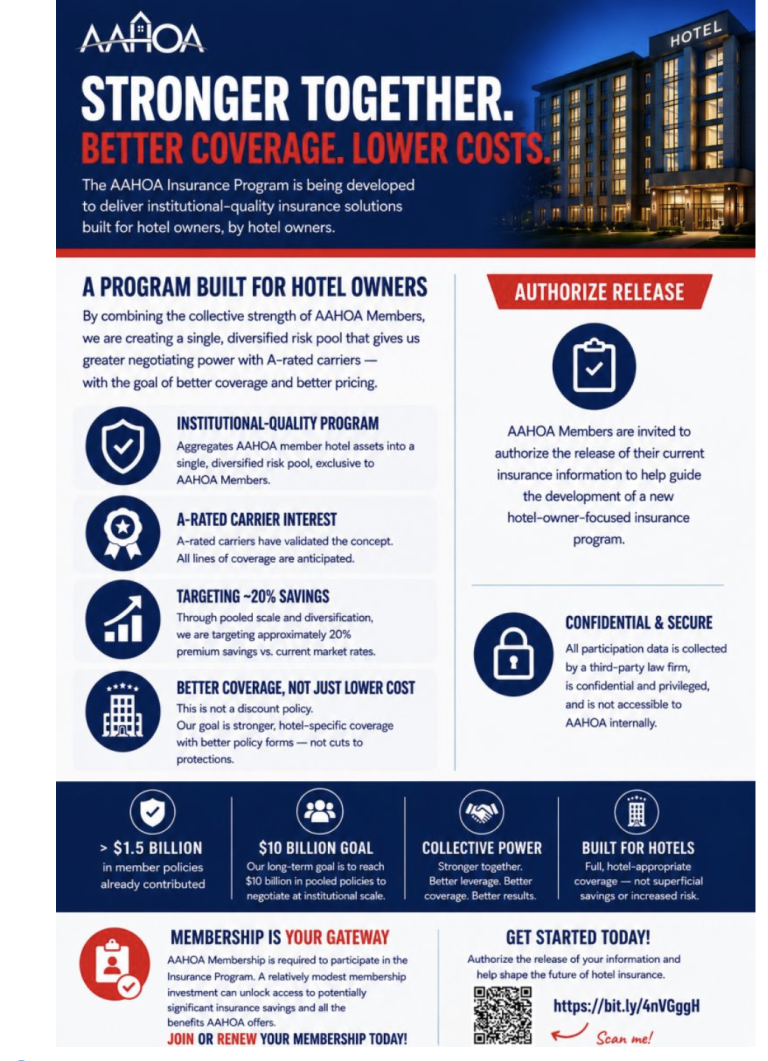
Find Out How You Could Slash Your Hotel Insurance Premiums by Up to 20% in 2026–2027 Thanks to AAHOA’s New Game-Changing Insurance Program
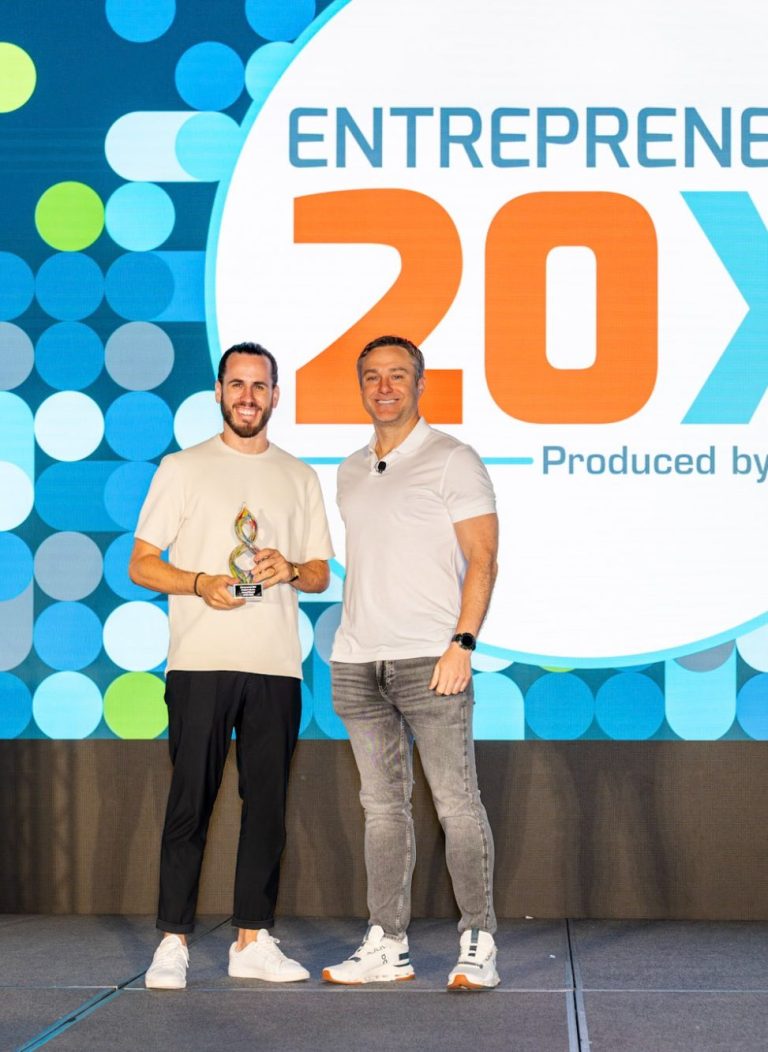
At HITEC 2026 in San Antonio, over 6,100 professionals watched agentic AI go from buzzword to game-changer. From Revinate’s Ivy automating 80% of guest inquiries to Samsung’s stunning new Frame Hospitality displays, the event was packed with real tools and tough questions. Discover this year’s E20X winners and find out why they could completely change how hotels balance cutting-edge innovation with the human touch that guests actually love.