The Robot Who Checked In But Never Checked Out
By Nathan Snyder
July 7, 2026
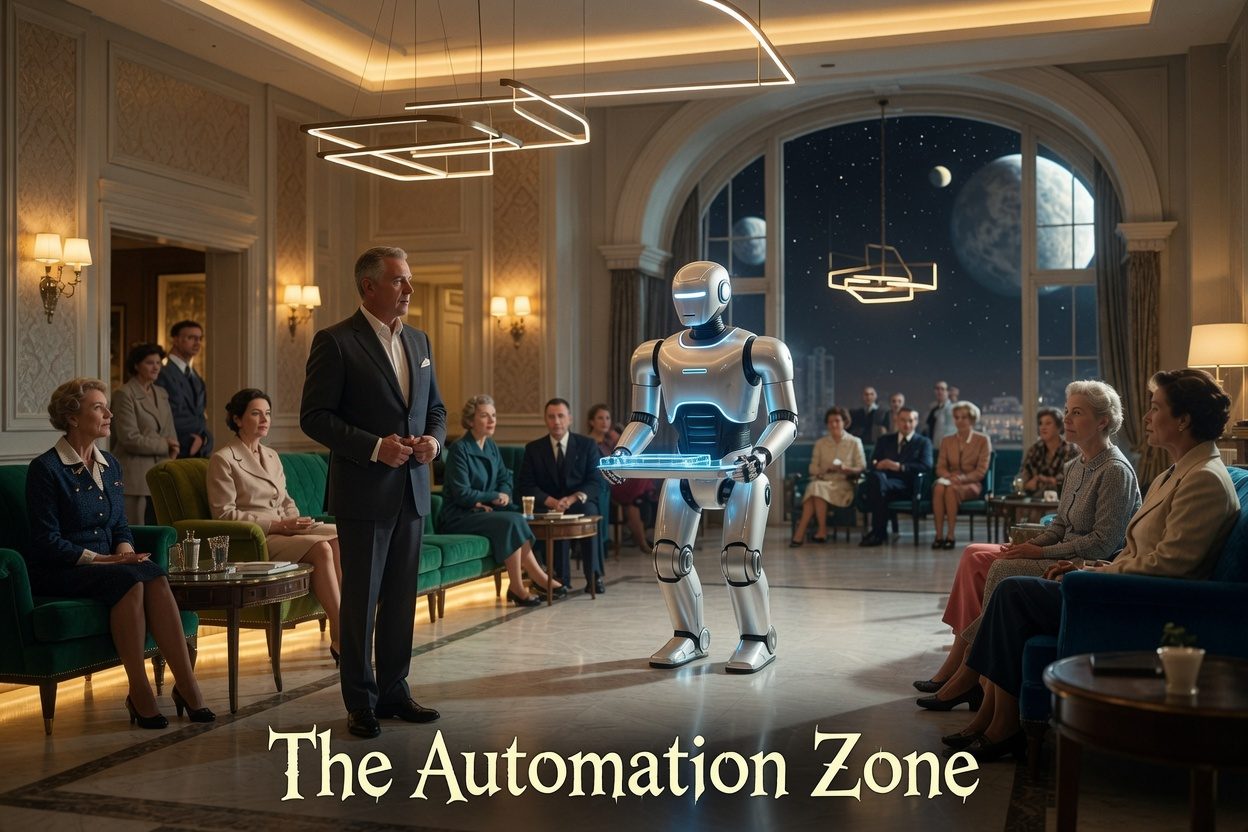
Picture, if you will, a world not so very different from our own. A world where the lobbies still gleam with marble and warm light, where the scent of fresh coffee lingers in the morning air, and where the quiet hum of progress has begun to replace the weary footsteps of the night shift. It is a world where the line between human touch and mechanical precision grows thinner with every passing season — a place where the familiar rituals of hospitality are being quietly, relentlessly rewritten.
You have just crossed into… The Automation Zone.
Labor shortages and rising operational costs are pushing hotel operators to explore automation more seriously than ever. While fully staff-less hotels remain years away in the United States, many properties are already achieving meaningful labor cost reductions and operational improvements through targeted robotics and AI solutions.
The most successful operators are not racing to replace people. They are strategically deploying robots and AI to handle repetitive tasks so their teams can focus on personalized guest experiences. This measured, hybrid approach is delivering measurable returns today.
The Current State of Robotics in American Hotels
U.S. hotels are primarily pursuing hybrid automation — robots and AI managing physical, repetitive work while humans handle guest interactions, problem-solving, and emotional connection. Delivery robots are the most widely adopted, followed by cleaning systems and digital guest-facing tools.
No fully unmanned hotel operates in the U.S. as of mid-2026. Instead, the focus remains on practical, high-ROI solutions that address real pain points like staffing shortages and high turnover in housekeeping and food & beverage roles.
The American Hotel & Lodging Association’s February 2025 survey found that 65% of hotels still report staffing shortages, with housekeeping (38%) and front-desk roles (26%) hit hardest (American Hotel & Lodging Association).
Key Technology Providers
Several companies have moved beyond pilots and are delivering reliable results at scale.
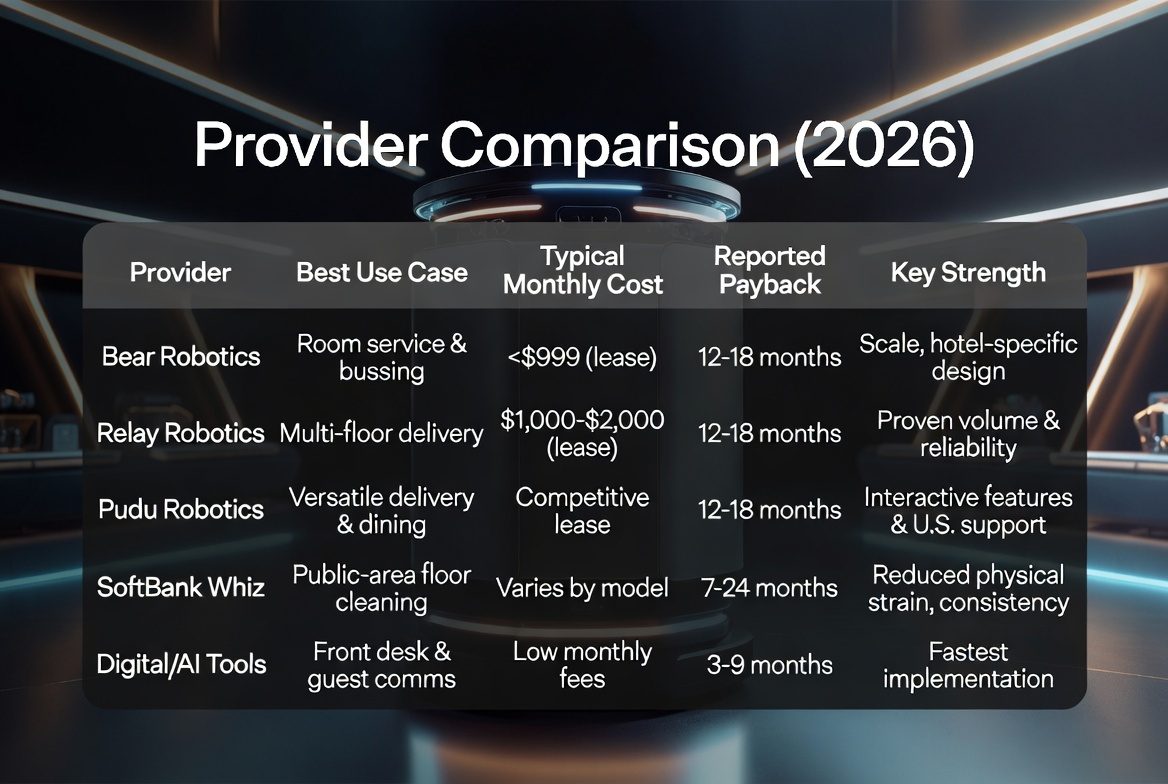
Bear Robotics has placed its Servi and Servi Plus robots in more than 200 Hilton properties for room service, food running, and bussing, as referenced in recent industry analyses (SparkCo). On lease models around $999 per month including maintenance, operators frequently report payback within 12–18 months and labor-cost reductions of 50–75% on delivery tasks.
Relay Robotics remains one of the most battle-tested options. Its robots have completed more than 1.5 million deliveries across Marriott, Hilton, Westin, and other brands (Relay Robotics). Some locations have seen room-service revenue rise sharply after introduction.
Pudu Robotics continues its rapid U.S. expansion with models such as BellaBot. In April 2026 the company opened its new Americas headquarters in the Dallas area to support growing demand (Pudu Robotics).
Cleaning robots, notably SoftBank’s Whiz, are gaining traction for autonomous floor scrubbing in hallways and public spaces. At the Hilton Garden Inn in Gilroy, California, deployment raised guest cleanliness scores from 82.7% to 90%, as documented in SoftBank Robotics case materials and still widely cited in 2026 industry analyses, while giving housekeepers roughly one additional minute per room to focus on the details guests notice (SoftBank Robotics; Revfine).
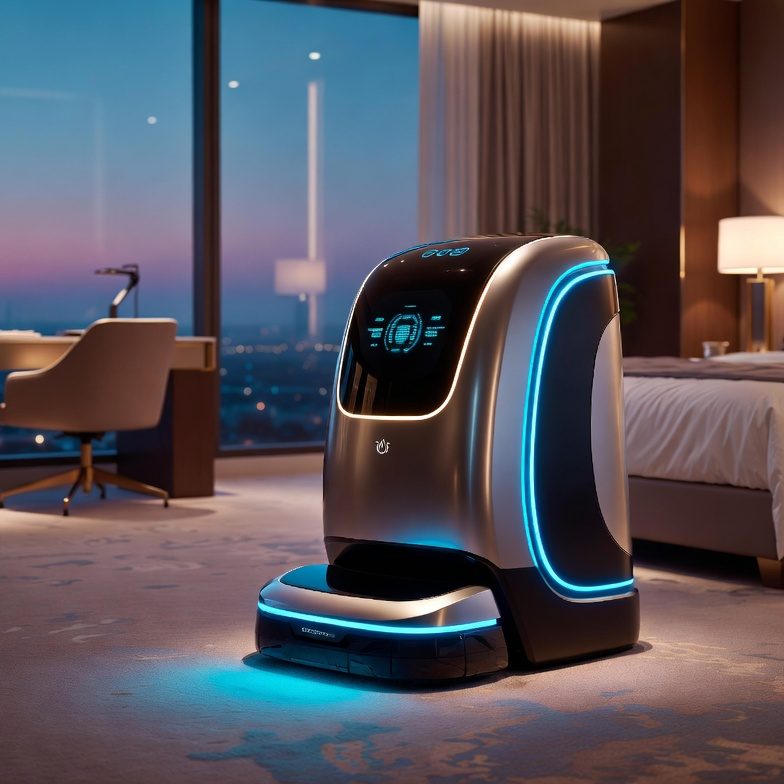
Digital & AI tools — including mobile check-in, digital keys, and AI guest messaging platforms — offer the lowest barrier to entry. Many can be implemented in weeks at a cost of just a few hundred dollars per month.
Mordor Intelligence’s June 2026 outlook values the hospitality robots market at USD 0.76 billion in 2026, projecting growth to USD 2.23 billion by 2031 at a 24.10% CAGR (Mordor Intelligence). This trajectory aligns closely with the h2c 2025 global study’s finding that 78% of hotel chains already deploy AI systems, with 89% planning further expansion in the next 12–24 months (Hospitality Upgrade).
Provider Comparison (2026)
Challenges and Considerations
Automation is not without hurdles. Older buildings can face integration issues with elevators and legacy systems. Some guests, particularly older demographics, still prefer human interaction for complex requests. Staff adoption requires thoughtful change management, and maintenance or technical support can occasionally disrupt operations. High initial costs and uncertainty around ROI also remain concerns for some operators.
Real-World Results
Documented deployments show clear benefits. Hilton’s large-scale use of Bear Robotics has delivered meaningful labor relief across hundreds of properties while maintaining strong guest satisfaction. Marriott’s Aloft brand reported efficiency gains and positive guest feedback from Relay robots. Properties that integrate robots with cloud-based management systems have reported 15–30% uplifts in operational metrics such as room-service punctuality and housekeeping turnaround (Mordor Intelligence).
Documented cases from high-labor-cost environments have shown payback as short as seven to ten months when utilization is strong. In the U.S. context, payback periods for delivery and cleaning robots typically fall in the 7–18 month range, with added benefits including reduced staff injuries, 24/7 availability, and improved guest perception of modernity and care.
How Hotels Can Start Automating Today
Many operators are successfully beginning their automation journey without massive upfront investment. Here’s a realistic action plan:
Phase 1: Quick Wins (1–8 Weeks) Implement software-first solutions: mobile check-in/digital keys, AI guest messaging, and housekeeping task management software. These often deliver fast ROI through reduced front desk and communication time.
Phase 2: Pilot Physical Automation (3–6 Months) Lease a single delivery robot (Bear Servi or Relay) for a high-volume area. Measure time saved, guest feedback, and revenue impact before expanding. Any general manager who has watched a lone night auditor juggle check-ins and room-service calls at 2 a.m. will immediately grasp the appeal of a robot that simply… shows up.
Phase 3: Scale What Works Add more robots or cleaning systems based on proven results. Focus first on repetitive, physically demanding tasks.
The Road Ahead (2027–2028)
The next two years are expected to bring more sophisticated pilots, particularly in high-labor-cost markets like Las Vegas and Orlando. Greater integration between delivery robots, AI concierges, and cleaning systems is likely. Humanoid robots for concierge roles may begin limited testing. However, most experts believe hybrid models — where technology handles the repetitive work and humans provide the personal touch — will remain the dominant approach for the foreseeable future.
The Human + Tech Balance
The most successful hotels will not be defined by how many robots they have, but by how thoughtfully they use technology to support their people. Automation works best when it frees staff to focus on what guests remember most: genuine care, problem-solving, and memorable experiences.
The future of hospitality is not robots replacing people. It’s robots and people working together — each doing what they do best.
So the next time you check into a hotel and a sleek machine glides silently across the lobby with your bags or your morning coffee, pause for a moment. You may have just stepped into… The Automation Zone.
What automation steps is your property considering? Share your experiences or questions in the comments below — we’d love to continue the conversation.
References
American Hotel & Lodging Association. (2025, February 20). 65% of surveyed hotels report staffing shortages. https://www.ahla.com/news/65-surveyed-hotels-report-staffing-shortages
DataMIntelligence. (2025, December 10). US hospitality service robots market size, share, industry, trends, and forecast 2025-2032. https://www.datamintelligence.com/research-report/us-hospitality-service-robots-market
FOX5 Las Vegas. (2025, September 17). Meet Oto: Is this humanoid robot the future of hospitality in Las Vegas? https://www.fox5vegas.com/2025/09/16/meet-oto-is-this-humanoid-robot-future-hospitality-las-vegas/
Hospitality Upgrade. (2026, January 23). AI in hospitality: The 2025 reality and the 2026 horizon. https://www.hospitalityupgrade.com/magazine-articles/ai-in-hospitality-the-2025-reality-and-the-2026-horizon
HotelGuru. (2026, February 24). The real ROI of hotel robots: Staff, guests, and the bottom line. https://hotelguru.com/articles/roi-of-hotel-robots
Mordor Intelligence. (2026, June 17). Hospitality robots market size & share outlook to 2031. https://www.mordorintelligence.com/industry-reports/hospitality-robots-market
National Geographic. (2026, April 30). My robot concierge: How ‘hybrid hospitality’ is reshaping travel. https://www.nationalgeographic.com/travel/article/hybrid-hospitality
NetSuite. (2025, December 1). Hotel automation: Benefits, strategies, and 2026 trends. https://www.netsuite.com/portal/resource/articles/erp/hotel-automation.shtml
Otonomus Boutique Hotel. (n.d.). Otonomus boutique hotel | Chic off-strip stay in Las Vegas. https://lasvegas.otonomushotel.com/
Proservbots. (2026). Hotel room service delivery robots: Complete guide 2026. https://proservbots.com/hotel-room-service-robots/
Pudu Robotics. (2026, April 27). Pudu Robotics inaugurates U.S. headquarters in Dallas, accelerating long-term growth in the Americas. https://www.pudurobotics.com/en/news/pudu-robotics-inaugurates-us-headquarters-dallas-americas-growth
Relay Robotics. (2024, April 22). Canadian hotel industry embraces delivery robots. https://relayrobotics.com/canadian-hotel-industry-embraces-delivery-robots/
Revfine. (2026, January 2). 17 examples of robots being used in the hospitality industry. https://www.revfine.com/robots-hospitality-industry/
Robozaps. (2026, June 6). Humanoid robots in hospitality [2026]. https://blog.robozaps.com/b/humanoid-robots-in-hospitality
SoftBank Robotics. (n.d.). Hotel cleaning robot | Case study: Guest cleanliness scores climb 90% with Whiz on the team. https://us.softbankrobotics.com/industries/hospitality
SparkCo. (2025, November 12). Service robot deployment in hospitality: Industry analysis and implementation guide 2025. https://sparkco.ai/blog/service-robot-hospitality-industry-deployment
Technology 4 Hotels. (2026). When does a hotel robot actually pay for itself? https://www.technology4hotels.com.au/hotel-technology/when-does-a-hotel-robot-actually-pay-for-itself
Other Suggested Reads

At a time when hospitality is being redefined by technology and efficiency, Michelle Warner reminds us what truly makes a hotel exceptional — people. As the 2026 Microtel GM of the Year, she has turned a limited-service property into a place where both guests and staff feel genuinely valued. From her thoughtful breakfast program to her empowering leadership style, Michelle proves that the greatest innovations in hospitality are often the most human ones.

At HITEC 2026 in San Antonio, over 6,100 professionals watched agentic AI go from buzzword to game-changer. From Revinate’s Ivy automating 80% of guest inquiries to Samsung’s stunning new Frame Hospitality displays, the event was packed with real tools and tough questions. Discover this year’s E20X winners and find out why they could completely change how hotels balance cutting-edge innovation with the human touch that guests actually love.
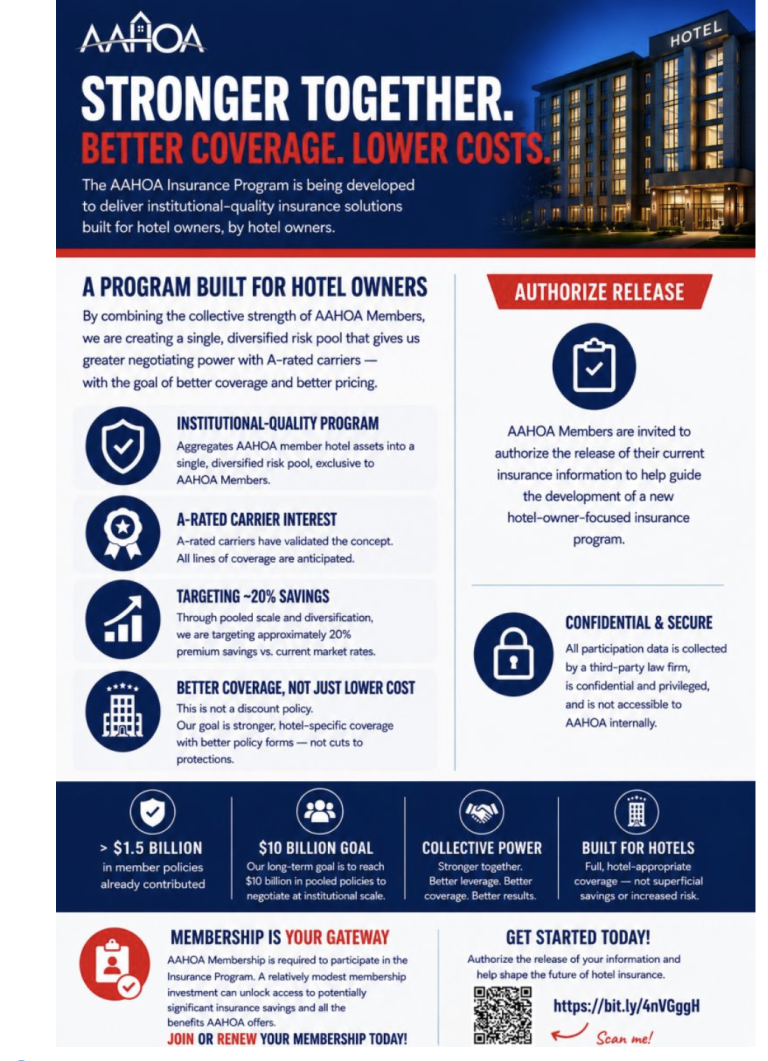
Find Out How You Could Slash Your Hotel Insurance Premiums by Up to 20% in 2026–2027 Thanks to AAHOA’s New Game-Changing Insurance Program

Room revenue alone is no longer enough. In 2026, savvy boutique hotel owners are turning every guest touchpoint into additional profit — often adding $20–$75+ per occupied room in ancillary revenue. The best part? Many of these strategies require minimal upfront investment while significantly boosting margins and guest satisfaction.