
FIFA’s Hotel Heist: How the World Cup Left Hoteliers Holding Empty Rooms and Empty Promises
By Nathan Snyder
July 14, 2026
FIFA’s early overcommitment of hotel room blocks for the 2026 World Cup—followed by cancellations that reached as high as 70 percent in several major U.S. host cities—manufactured artificial demand, inflated rates, and left operators with softer-than-expected occupancy and disrupted projections; although mid-tournament gains in average daily rate ultimately drove RevPAR well above initial forecasts, the episode still delivers a lasting lesson for managers, front-desk teams, owners, and brokers: never treat any organizing body’s block commitment as absolute (American Hotel & Lodging Association, 2026a).
The hospitality industry entered 2026 with genuine optimism. From the moment the United States, Canada, and Mexico secured hosting rights, FIFA’s accommodations team secured thousands of room nights across the 16 host cities for officials, sponsors, media, and technical staff. Hotels responded accordingly. Revenue managers adjusted pricing aggressively after the draw. Temporary staffing plans expanded. Capital improvements moved forward. In Philadelphia alone, FIFA held approximately 10,000 room nights under contract; Kansas City reported peak blocks near 5,000 rooms per night. Then the cancellations arrived. Up to 70 percent of FIFA-reserved inventory was released in Boston, Dallas, Los Angeles, Philadelphia, and Seattle. Philadelphia alone saw roughly 2,000 rooms returned. Greater Philadelphia Hotel Association CEO Ed Grose described the development as disappointing, noting that changes of this scale create genuine operational challenges. One industry analyst summarized the broader impact with characteristic sharpness: tens of thousands of room nights simply disappeared (BBC Sport, 2026; Travel Weekly, 2026a).
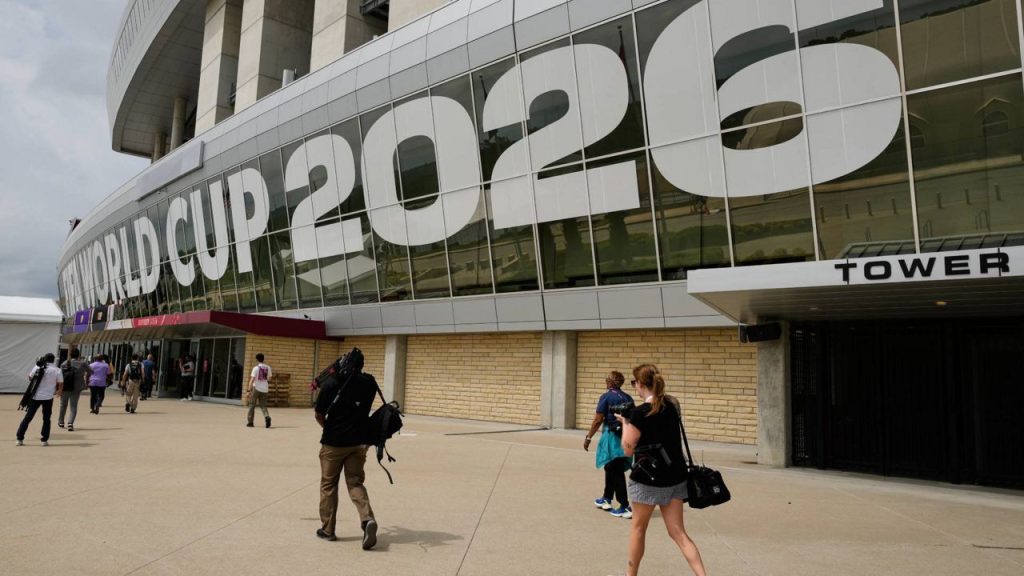
The American Hotel & Lodging Association’s May 2026 Hotel Outlook quantified the damage with precision. Nearly 80 percent of surveyed U.S. host-city hoteliers reported bookings tracking below initial forecasts—and in many cases below a typical summer. Kansas City stood out as particularly affected, with 85 to 90 percent of respondents characterizing demand as disappointing. Boston, Philadelphia, San Francisco, and Seattle offered similar assessments. FIFA noted that more than five million tickets had been sold and that all releases followed contractual timelines. Those facts are accurate. Yet tickets do not automatically convert into hotel nights when international travelers confront visa barriers, a strong dollar, elevated airfares, and FIFA’s own dynamic pricing that pushed certain finals tickets into five-figure territory. Domestic travelers filled some of the gap, but they generally spend less and stay for shorter periods. The anticipated surge in high-spending international visitation arrived more modestly than projected (American Hotel & Lodging Association, 2026b; The Athletic, 2026).
The story, however, did not end in May. By mid-July 2026—with the tournament in its knockout stages, attendance exceeding 6.5 million, and the semifinals set (France versus Spain in Dallas, England versus Argentina in Atlanta)—hotel performance data revealed a more nuanced picture. CoStar and Travel Weekly analyses show that host-city RevPAR ultimately surpassed the original 13 percent year-over-year forecast, averaging well above 20 percent from mid-June onward. Nearly all of those gains stemmed from average daily rate, which rose between 21 and 51 percent in strong markets such as Miami. Occupancy, by contrast, remained the weaker element—frequently flat or lower on both match days and shoulder periods. Philadelphia recorded a more robust occupancy increase, aided by concurrent events. Atlanta, Seattle, and Kansas City continued to experience softer demand in certain weeks. The early cancellations inflicted real pain. The subsequent rate-driven recovery, achieved by operators who adjusted pricing with agility, provided a meaningful if incomplete offset (CoStar, 2026a; Travel Weekly, 2026b; CoStar, 2026b).
The implications touch every role within the hotel ecosystem. Front-desk teams that prepared extensively for multilingual international arrivals often encountered quieter nights and more familiar domestic guests. Managers who constructed labor models around FIFA’s early signals found themselves overstaffed in some periods and under-resourced in others. Owners who authorized World Cup-specific activations and temporary capital projects watched many of those initiatives pause while labor, insurance, and utility costs continued to rise. Brokers have already begun re-evaluating mega-event underwriting assumptions with greater caution, asking how reliable any single large block truly is when free-cancellation rights can be exercised three months prior to arrival. The situation carries an almost comic element—FIFA as the most powerful guest who reserves extensively and then largely withdraws—yet the financial consequences remain serious (Hotel Dive, 2026a; Lighthouse Intelligence, 2026).
When the May AHLA findings are placed alongside the July CoStar weekly data, Lighthouse pricing analyses, and local association reports from Philadelphia and Kansas City, a consistent pattern emerges. Organizing bodies naturally prioritize their own operational and financial objectives. Hotels absorb the resulting volatility. The American Hotel & Lodging Association has already advocated for longer lead times on releases, greater transparency, and more collaborative planning. Operators who treated the early block signals as provisional rather than definitive, and who adjusted rates promptly, captured the available demand most effectively. Markets with strong underlying leisure demand or complementary events navigated the turbulence more successfully. That combination of evidence constitutes the enduring lesson of 2026 (American Hotel & Lodging Association, 2026a; Skift, 2026; Sports Travel Magazine, 2026).
FIFA’s early overcommitment and subsequent mass cancellations created a demand illusion that left many U.S. hoteliers managing empty rooms and recalibrated expectations through the spring and early summer. The mid-tournament rate-driven RevPAR recovery exceeding 20 percent offered a partial and hard-earned correction, demonstrating once again that disciplined dynamic pricing remains a powerful tool. Yet the complete arc—from inflated early projections to soft occupancy to rate-based redemption—confirms the central claim: no single block, regardless of the prestige of the organization behind it, should ever be treated as guaranteed. For managers, front-desk professionals, owners, and brokers alike, the 2026 World Cup has rewritten critical assumptions about mega-event demand. Stadiums filled to capacity. Many hotels did not experience equivalent fullness. That costly education will influence contract negotiations for the next major event for years to come. The industry would do well to remember it.
References American Hotel & Lodging Association. (2026a, May 4). New report warns World Cup hotel boom may fall short of expectations. https://www.ahla.com/news/new-report-warns-world-cup-hotel-boom-may-fall-short-expectations American Hotel & Lodging Association. (2026b). U.S. hotel outlook report: FIFA World Cup 2026. https://www.ahla.com/resource/us-hotel-outlook-report-fifa-world-cup-2026 BBC Sport. (2026, May 20). Empty rooms & FIFA cancellations – US hotels fear washout. https://www.bbc.com/sport/football/articles/c9q34pxv79eo Business Traveller. (2026, April 23). US hotels cut summer rates amid weak demand for World Cup bookings. CoStar. (2026a, July 2). World Cup fuels record US hotel rates as demand shifts beyond host cities. CoStar. (2026b, June 18). US hotels kick off World Cup summer with a solid revenue goal. Greater Philadelphia Hotel Association. (2026). Statements reported in Travel Weekly regarding Philadelphia cancellations. Hotel Dive. (2026a, May 4). US hotel bookings for World Cup ‘tracking below initial forecasts’: AHLA. Hotel Dive. (2026b). Hotels in World Cup host cities exceed initial RevPAR forecast. Lighthouse Intelligence. (2026, May 10). FIFA room cancellations add pressure to World Cup 2026 hotel demand. Middle East Eye. (2026, June 22). World Cup 2026: Why some US hotels aren’t cashing in on tourism surge. Skift. (2026, June 20). World Cup Week 1: Boosting hotel revenue, but not always occupancy. Sports Illustrated. (2026, April 15). Why U.S. hotel prices are getting ‘slashed’ for the 2026 World Cup. Sports Travel Magazine. (2026). 2026 FIFA World Cup: Lodging hits and misses. The Athletic. (2026, May 4). Hotels in U.S. World Cup host cities claim underwhelming demand, new report says. Travel Weekly. (2026a, March 27). World Cup room-block cancellations dim some hopes for outsize boost. Travel Weekly. (2026b). Revenue surges in U.S. host cities for World Cup. Yahoo Finance. (2026). World Cup: Why US hotels may not be seeing the turnout they expected. Additional supporting analyses drawn from Far Out Magazine (2026) FIFA hotel scandal reporting; Fort Worth Report/KERA (2026) Dallas-Arlington cancellations; CoStar STR weekly reports through early July 2026; AHLA Front Desk Feedback surveys; and local hotel association statements from Philadelphia and Kansas City.